

Teaching Literary Terms and Devices with Children’s Picture Books
By Hannah Atchison, Youth Services Librarian
 English was always one of my favorite subjects. But when it came to learning literary terms, I lost interest quickly. College entry tests included them, so unfortunately, they were a necessity. I dragged my feet through it. The way we teach things plays a huge impact in whether the information taught will be absorbed. Using picture books to teach presents the material in both a fun and accessible way. Picture books can teach literary devices and terms in a way that makes learning them both quick and enjoyable. Here are a few fun reads from the children’s section at our library.
“The Mitten: a Ukrainian Folktale” adapted and illustrated by Jan Brett has magical, cozy illustrations. A mitten is dropped in the snow. Animals looking for warmth on a cold day climb into the mitten and stretch it until even a bear can fit inside. On each preceding page, there is a small picture on the far panel of the next approaching animal. These illustrations can be used to teach foreshadowing and prediction.
“Amelia Bedelia” by Peggy Parish is a beginning reader with pictures about a young woman working as a maid named Amelia Bedelia who takes everything she hears literally. Her misinterpretations of the tasks she is given have hilarious results that make readers of all ages laugh. Idioms can be a tricky concept to teach, but this book makes the experience fun and memorable.
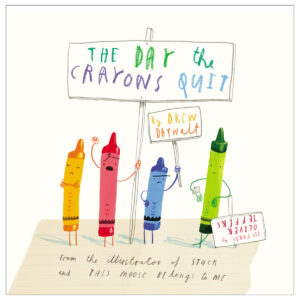
“The Day the Crayons Quit” by Drew Daywalt uses personification of crayons, giving them human characteristics, to present a fun story from their perspectives. The crayons all have opinions about what they would rather be coloring instead of what they are usually used for. Personification is used in a ton of picture books. This is just one popular example.
“They All Saw a Cat” by Brendan Wenzel is about how perspective shapes what people, or animals in this case, see and understand. Each creature name is listed in all caps and the cat’s description is a short summary of the parts that make up a cat, but each illustration of the cat is a little bit different because of the way each creature sees the world and the cat as it relates to them.
“The Whole Hole Story” by Vivian McInerny is a picture book told using the literary method of stream of consciousness. The main character goes on an adventure as she explores the many imaginary uses of a hole. Each thought and experience slip into the next in a whimsical storytelling experience.
“Snappsy the Alligator: ‘Did Not Ask to Be in This Book!’” by Julie Falatko is one of many picture books we have using metalepsis. If you are not familiar with the term, it may help to understand what a frame story is. A frame story is a story within a story, like a folktale, that provides context for the literary piece. Metalepsis works similarly. The story recognizes that there are multiple levels within it: a “self-aware” book. In this story, the way metalepsis is used is by having a continuous conversation between the narrator and the main character, Snappsy, who is correcting them, ending with the narrator joining the story as a character.
“Chicka Chicka Boom Boom” by Bill Martin and John Archambault is a classic from my childhood that uses an abundance of alliteration, words that touch that use the same beginning sound or letter. It is also an excellent example for teaching young children how to hear syllables in words by using the rhythm of the text.
“Poopsie Gets Lost” by Hannah E. Harrison is one of my current favorites. Poopsie is a house cat who is being convinced by “the narrator” to leave her home and explore the jungle outside. During the course of the story, both the reader and Poopsie slowly realize that maybe they shouldn’t be listening to “the narrator” after all. It’s a silly and dangerous adventure that also teaches the concept of an unreliable narrator. Don’t worry. It still has a happy ending.
Everything is better with picture books. Why not make the learning experience more fun? Picture books can be used to teach many things. Maybe there are other tricky concepts they can assist you and your students with. If you need help gathering more suggestions, you know where to find us.
Manhattan Public Library is a cornerstone of free and equal access to a world of ideas and information for the Manhattan, Kansas, community. Manhattan Public Library serves more than 75,000 people in the Riley County area through curated book and other media collections, knowledgeable staff, relevant programming for all ages, and meeting space. Learn more at mhklibrary.org.
###
Hannah Atchison, Youth Services Librarian
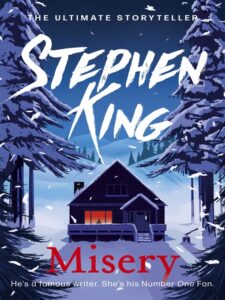 Spooky Season = Stephen King
 When the season begins to change, I often find myself remembering one of my favorite literary quotes: “I’m so glad I live in a world where there are Octobers.” This quote comes from L.M. Montgomery’s classic novel “
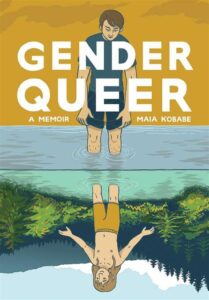 The American Library Association (ALA) does many things for the profession from establishing guidelines for librarians across the board, to ethical requirements, to hosting a public policy and advocacy board, and tracking book challenges across the country through their Office for Intellectual Freedom (OIF). The OIF has been tracking book challenges and collecting data about challenged books since 1990, while the ALA established its now famous ‘Banned Books Week’ in 1982. In 2006, the organizations started to release the State of the Libraries Report. The report is published yearly and reflects the data collected for the previous year. According to the ALA State of America’s Libraries Report for 2024, they documented “4,240 unique book titles targeted for censorship in 2023—a 65% surge over 2022 numbers—as well as 1,247 demands to censor library books, materials, and resources…The number of titles targeted for censorship at public libraries increased by 92% over the previous year, accounting for about 46% of all book challenges in 2023.”
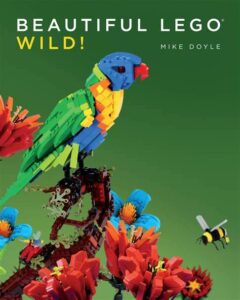 I love LEGO. Do you love LEGO? Your friendly neighborhood readers’ advisory librarian is a huge fan of this interlocking brick system. Honestly, feel free to come by my office at the library to see my collection. I have a whole garden of flowers and a small collection of books, even a pop-up book. At home my collection is slightly nerdier, including many Star Wars ships, The Big Bang Theory set, Disney Villains, and even a LEGO Atari. LEGO has always embraced the idea that they are for everyone, but it wasn’t until 2017 that they started marketing directly to adults; the first adult age range sets weren’t released until 2020.
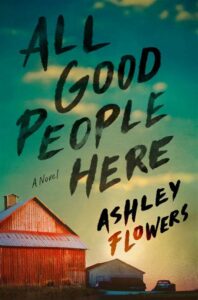 The pools are closed, kids are back in school, and the call of pumpkin patches and cozy socks has begun to tempt me into believing autumn is near. While the Kansas weather may disagree, I’ve begun daydreaming of sweater weather with chilly nights and brisk mornings. At times I even allow myself to imagine an evening walk without the threat of mosquitoes. But while my zinnias are still in full bloom and tomatoes continue to ripen on the vine, I’ll have to settle for the chill of mystery and thriller books – with the aid of central air – for a few more weeks.
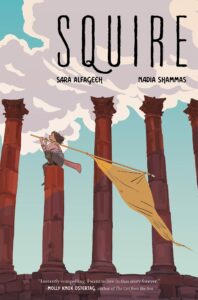 As an avid reader of Sci-Fi and Fantasy books, visualizing the world the author is creating is crucial. Being able to take the words from the page and build them into rich worlds that are interconnected and vital to the story is key, yet most people will visualize characters and settings differently than the next. This is a fun way to flex one’s creativity and the world is made better by those who take these thoughts and create and share fanart of their favorite books. However, when an author decides to write a graphic novel the illustrations are specifically chosen for the story, a point that cannot be overstated. The author, who doubles as the illustrator for some novels, can also remove any ambiguity about character design and the world by using this format. Graphic novels uniquely combine visual art with written narratives: illustrations, vibrant colors, and detailed artwork transport readers into captivating worlds. The storyline is equally crucial—amazing visuals must align with a compelling plot to create a successful graphic novel. Graphic novels delve into societal issues through visual interpretations. Works like Marjane Satrapi’s “
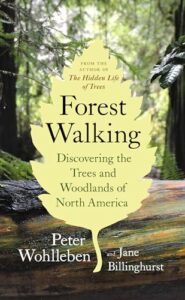 The heat of summer is upon us, and many of us will fill the few nice days with outdoor activities: hikes, trips to the zoo, the county fair, and, of course, the ever-calling draw of swimming. At Manhattan Public Library, we pride ourselves on our diverse program activities. You may have noticed a slew of new adult programs on our calendar thanks to our new Adult Programming Librarian, Victoria. Recently she took a group of 17 library patrons on a hike; it turned out to be a lovely day and a hit. I suspect we will see more outdoor adventures planned in the near future. If you missed the hike, we have created a handy-dandy list of books you can check out to explore the prairie on your own. All information for these titles has been taken from our catalog, which can be accessed at