

Indigenous K-State
By Audrey Swartz, Adult Services Librarian II and Reader’s Advisory
 Indigenous Kansas was the theme of this year’s October 10th Indigenous People’s Day, hosted at K-State by the members of the Indigenous Faculty Staff Alliance (IFSA). IFSA is composed of both Indigenous and non-Indigenous faculty and staff from across the university. They work through all levels of the university and community to support diversity and inclusion across the board. I have proudly been a member since my arrival in Kansas in 2016. With their encouragement, I quickly found a home, gained many new Aunties, and became curious about the Indigenous history at K-State, which led me on a multi-year journey and research project. This focus on Kansas Indigeneity respired my curiosity about how Indigenous students were or weren’t documented in K-State history.
For this article I re-visited several K-State history books that we, at Manhattan Public Library, have in our collection. The first book I read is “The History of Kansas State College of Agricultural and Applied Science.” J.T. Willard’s book, along with the index, documents the university from 1862-1939. Willard’s book is extensive and covers everything from where and who the earlier settlers were to each budget line of a department. He was specific in the topics he chose and painstakingly exact about every detail, minus one. There is no mention or clue in his book of who the first Indigenous students could be. His book ends before the university’s first Black students can be mentioned, George Washington Owens graduated in 1899 and Minnie Howell Campbell in 1901. Other K-State history books in our collection follow this template but tend to be less intense, such as J.D. Walters’s book, “History of The Kansas State Agricultural College”. Walters’ book is a brief overview of university history from 1855-1908. He also fails to mention any students of color. These resources did not aid me in attempts to re-insert the Indigenous narrative back into the institutional record, a problem that is not new.
There was a clear hole in the collection that needed to be filled. This is a reality across the board, in relation to people of color. Work, hard work, is just producing results to find, document, and insert peoples into the collective narrative that were purposefully left out. In her book, “Born of Lakes and Plains,” Anne F. Hyde follows 5 mixed-blood families through the 19th century. She documents the displacement of mixed-bloods during the 19th century because of blood quantum and land allotment politics. She deftly demonstrates the challenges that mixed-blooded folk have with keeping their history in the bigger story. In a similar vein, Margaret D. Jacobs’ book, “After One Hundred Winters,” traces the systematic racism and racial injustice Indigenous people face. She documents how communities are working together to heal historical wounds. Her book also takes time to examine the history of colonialism and the efforts people are going through to heal.
In this case, I was trying to both document and put this story back into the collective narrative. I began this research as a side project, but that quickly changed. With help from Alex Wulfkuhle and Cassie Wefald, we tracked any mention of Indian/Native/Native American/American Indian/Indigenous people in the digitized newspapers at K-State.
Following a trail from the “Industrialist”, we found two likely candidates: the Davidson brothers from Indian territory-Fort Sill and the Cobb family from Indian territory-Oklahoma. The Davidson brothers proved easy to track, because of their connection to a fort, and it is likely they were traditional white students, whose father happened to teach Military Sciences at the college. The Cobb family proved more difficult to trace. In an “Industrialist” article we found a sentence about Samuel Cobb Jr. sharing his Cherokee culture to fellow students. Latching onto that, I went down a rabbit hole of genealogical research, archives research, and a bunch of Googling. What I discovered was fascinating. This family lived on Cherokee land, ranching it, in Georgia, and were forcibly removed to Indian territory, now Wagoner, OK. I can easily trace this family through the federal Indian and tribal rolls, documents that state where people were removed to, what their names are and their family members, and even their blood quantum (the Cobbs’ mother was Cherokee and their father was likely mixed or white). Once they were in Oklahoma, they rebuilt the ranch and helped build the town.
While many history books about K-State are detailed and cover much ground, there is still much work to be done to put the people who were forgotten back into the narrative.
 Since “Bridgerton” first took Netflix by storm in 2020, there’s been a renewed surge of interest in Regency romances. On screens, there’s been “Bridgerton” season two, a similarly-cast adaptation of “Mr. Malcolm’s List,” a second season of “Sanditon,” and a remake of Jane Austen’s “Persuasion.” In print, there’s the usual steady stream of Regency-set romance novels, but a growing swath of these focus on narratives that have thus far been decidedly outside of the mainstream.
 Today is Sweetest Day, a little-known holiday reportedly started by the candy industry more than 100 years ago, and celebrated similarly to Valentine’s Day in some spots of the Midwest. But Sweetest Day has the added impact of encouraging other sweet actions as well, such as helping your neighbors, doing acts of kindness, and giving gifts to friends and people in need. These themes show up in many children’s books, I think because children have a big heart for people who need some uplifting, and children are excellent purveyors of love and kindness with the ability to melt the hearts of others. Here are some sweet books to share with children to celebrate the holiday.
 I recently went on a vacation where I had copious amounts of time to read. That doesn’t happen very often anymore. Despite one of the greatest misconceptions about working in a library, I don’t sit around at work reading books, and when I get home there are other distractions that readily pull me away from reading, like watching a tiny human or doing adult things like washing dishes. But when the opportunity presents itself to sit in the shade on a nice day reading books for hours, I do my best to embrace it.
 The
The 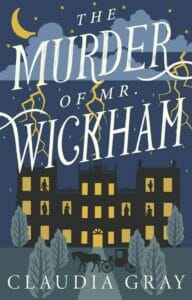 In my opinion, there is no better way to spend a fall afternoon than curled up in a comfy chair, with a cup of tea and a good mystery novel. Here are some of the new mysteries available at Manhattan Public Library.
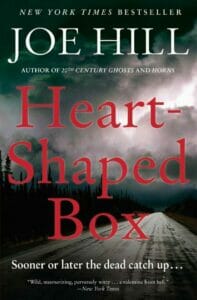 With fall rapidly approaching and Halloween around the corner, now is a good time to discuss my preferred genre, horror. Since there are so many books to choose from, I would like to share some of my favorite authors who have mastered this category, and have more than one good book to offer.
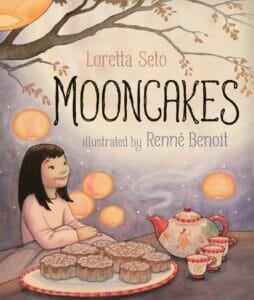 Picture this: leaves, just beginning to change color, glimmering gold, silver, and bronze under the light of the full moon. Countless paper lanterns in every color, many in the shape of rabbits, illuminating walkways and windows. The sounds of music playing and people laughing drifting from dining rooms and backyards. The smell of fresh mooncakes mixing with the scent of noodles and roasted duck. In countless homes across China and many East Asian countries, these snapshots showcase just a few ways the Mid-Autumn Festival is celebrated. This year, it’s on September 10.
 Ever since I was young, the start of school has meant that it is time for Fall to begin. However, since we’re still dealing with 90-degree days that refuse to let me wear comfy sweaters and drink hot cider, I have to get my autumnal fix from books. Over the last year or so I’ve found an interesting niche of books that have been labeled under the sub-genre “dark academia.” Dark academia originally began as an aesthetic, with photo collages, music, and fashion choices donning the label. Think, college library with stone and gargoyles on a rainy day, and sometimes murder or psychological horror mixed in. It is worth noting that while I adore this genre, it is not for everyone. I highly suggest checking trigger warnings before reading any dark academia or horror books to be sure you’ll enjoy the title.
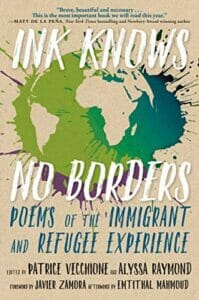
 With classes started, swarms of people walking through campus, and Aggieville being in full swing, we get to welcome back K-State students. As the class of 2026 joins the Manhattan community, they also join their fellow classmates in reading this year’s K-State First Book, “